R6Guides · 5 min read
How to Choose a CPU in 2026
Games want cache and heavy work wants cores. Pick between Ryzen 9000 and Core Ultra 200S, weigh socket lifespan, and learn when to keep your chip.
PC Parts Reviews Editors · November 9, 2026
The short version
- Buy an X3D chip for gaming, because extra cache beats extra cores in Tom's Hardware's 1080p results by a wide margin.
- Buy a high-core Ryzen 9 or a Core Ultra 7 270K Plus for rendering, compiling and encoding, where thread count decides the result.
- Pick AM5 if you want an upgrade path, since AMD has committed to supporting the socket through 2029 and LGA1851 is expected to give way to a new socket.
- Check whether your graphics card is already maxed out before you upgrade, because a faster CPU adds little when the GPU is the limit.
- Plan cooling around maximum power, not TDP, since chips rated at 125 W can draw 250 W under sustained load.
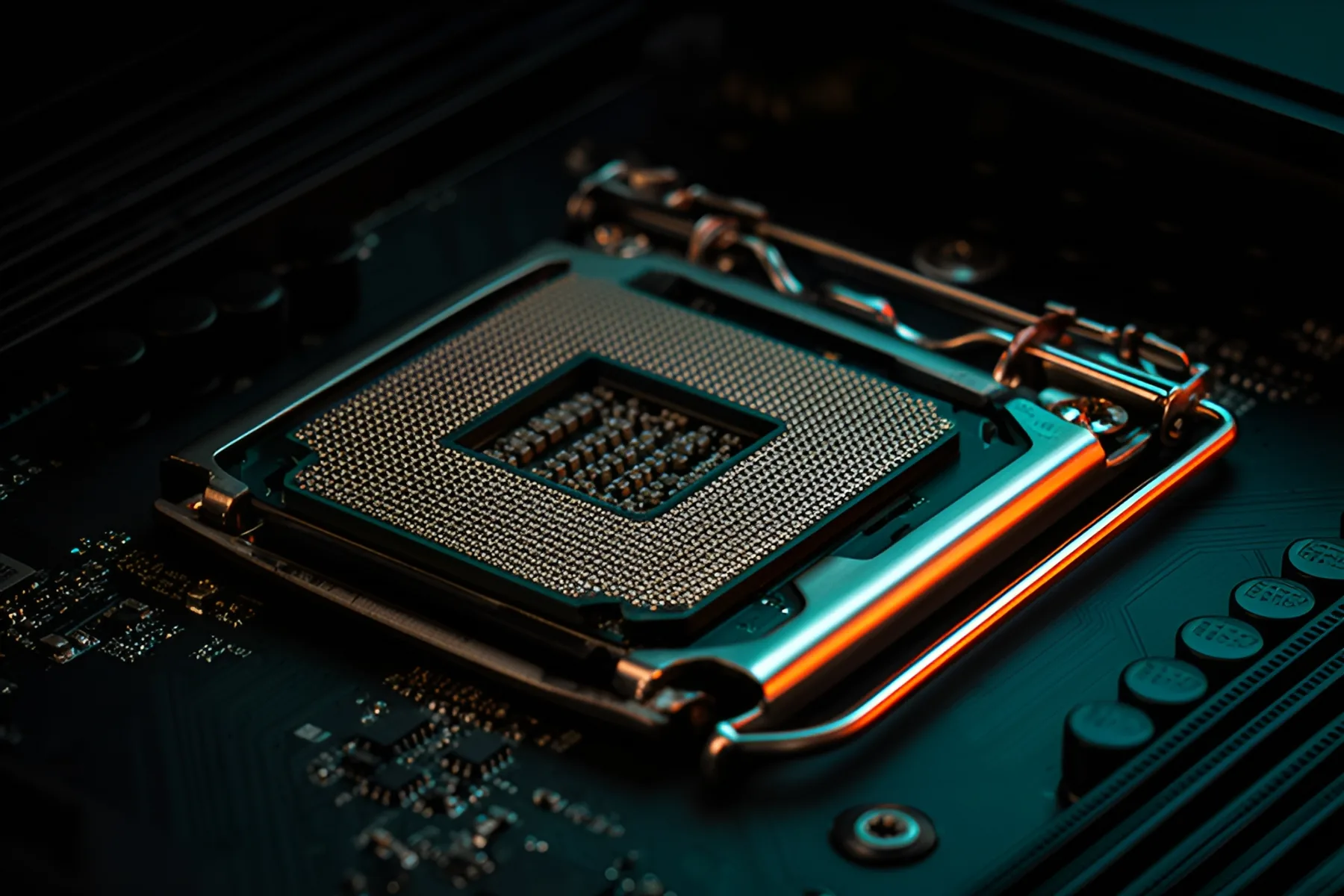
Decide what the PC does for most of its life, then buy the cheapest CPU that does not hold that job back. For gaming, that means a chip with a lot of cache. For rendering, compiling and encoding, it means as many fast cores as you can cool. Few people need both, and the chips that offer both charge for it.
Gaming: cache beats cores
The results are lopsided. In Tom's Hardware's current 1080p testing with an RTX 5090, the Ryzen 7 9850X3D scores 100 percent, the Ryzen 7 9800X3D 97 and the Ryzen 9 9950X3D 95.7. The 16-core Ryzen 9 9950X, without the extra cache, lands at 76.9. An eight-core chip with 96 MB of L3 cache beats a 16-core chip with 64 MB by about a quarter, because games spend much of their time waiting on data. Our 3D V-Cache explainer covers why.
Keep two things in mind. The 9850X3D is only about 3 percent faster than the 9800X3D, so buy whichever is cheaper. And 1080p with the fastest GPU available is the worst case for a CPU. At 1440p and 4K, your graphics card sets the limit much sooner and these gaps shrink.
That is why cheaper chips still make sense. The Ryzen 5 9600X reaches about three-quarters of the 9800X3D's score at less than half its street price, and the Ryzen 5 7600X3D lands above 80 percent with the same 96 MB cache. For a mid-range graphics card at 1440p, either is a better place to put your money than a flagship.
Productivity: cores and threads
Multithreaded work reverses the order. In Tom's Hardware's rankings the Ryzen 9 9950X3D2 leads, followed by the 9950X3D at 96 percent and the 9950X at 93. The Core Ultra 7 270K Plus reaches 92 percent and leads the single-threaded chart, and on November 9 it cost far less than a 9950X. The 9800X3D, by contrast, scores about 55 percent in the same test.
Avoid paying more for the Core Ultra 9 285K. The 270K Plus beat it in gaming, single-threaded and multithreaded results while selling for less.
| Your PC mostly does | Shortlist | Why |
|---|---|---|
| High-refresh or simulation gaming | Ryzen 7 9800X3D, Ryzen 7 9850X3D | Top of the gaming chart |
| Mainstream 1440p gaming | Ryzen 5 9600X, Ryzen 5 7600X3D, Core Ultra 5 250K Plus | Most of the speed at a much lower price |
| Gaming and heavy work equally | Ryzen 9 9950X3D | Near the top of both charts |
| Rendering, compiling, encoding | Core Ultra 7 270K Plus, Ryzen 9 9950X | Strong thread counts for the price |
| Everyday PC with no graphics card | Ryzen 5 8600G, Core Ultra 5 225 | Integrated graphics included |
Watch the suffixes. Intel's F and KF chips and AMD's F chips have no integrated graphics, so they need a separate card. See the CPU category and our rankings for current options, or the tier list for a quick read across generations.
Platform lifespan: AM5 vs LGA1851
Choose AM5 if you want to upgrade the CPU later without replacing the motherboard. AMD extended its AM5 support commitment through 2029 at Computex 2026, and all AM5 boards work with all AM5 processors, although 600-series boards may need a BIOS update for newer chips.
LGA1851 is a good platform with a short road ahead. Intel says the Core Ultra 200S Plus chips work on all existing 800-series boards, but reporting points to Nova Lake moving to a new socket called LGA1954. Buy LGA1851 because the chip suits you today, and assume the next CPU will need a new board. Our AM5 vs LGA1851 comparison goes through the details, and our piece on Zen 6 and Nova Lake covers what is coming. Neither is available yet, so do not wait on them unless your current PC is still doing its job.
Older platforms have one advantage right now: AM4 and many LGA1700 boards use DDR4, which is far cheaper than DDR5. A drop-in chip from the Ryzen 5000 family or a Core i5-14400F can be the smartest upgrade if it lets you keep your memory.
When not to upgrade
Check before you spend. Run your heaviest game with a performance overlay and watch GPU usage. If it sits around 95 to 100 percent, your graphics card is the limit and a faster CPU will add little. If GPU usage is well below that while frame rates disappoint, the CPU is holding things back.
Do not upgrade for a small generational step. Going from a Ryzen 7 7800X3D to a 9800X3D buys about 13 percent in that worst-case 1080p test, and much less at 4K. Do not move to a new platform just for a modest gain either, because a new socket usually means a new board and possibly a DDR5 kit, and memory is the most painful line item in any build this year. Put the money toward a better graphics card or a better monitor first.
The exceptions are real stutter in CPU-heavy games, simulation and strategy titles, and very old quad-core chips that struggle with modern background loads.
Cooling and power
Plan around maximum power, not the headline TDP. The table shows how far apart the two numbers can be.
| CPU | Rated | Maximum power | Sensible cooling |
|---|---|---|---|
| Ryzen 5 9600X, Ryzen 7 9700X | 65 W | 88 W | Single-tower air cooler |
| Ryzen 7 9800X3D, 9850X3D | 120 W | 162 W | Good dual-tower or 240 mm liquid |
| Core Ultra 5 250K Plus | 125 W | 159 W | Good dual-tower |
| Ryzen 9 9950X, 9950X3D | 170 W | 230 W | Large dual-tower or 360 mm liquid |
| Core Ultra 7 270K Plus, Core Ultra 9 285K | 125 W | 250 W | 360 mm liquid for sustained loads |
| Ryzen 9 9950X3D2 | 200 W | 270 W | 360 mm liquid |
AMD recommends liquid cooling for the 9800X3D for best results, but Tom's Hardware runs one under a dual-tower air cooler on its GPU test bench, so air is a reasonable choice for gaming. Games rarely push any of these chips to their maximum for long, while rendering will.
High-power chips also ask more of the rest of the build. Pair a 230 W or 250 W processor with a motherboard that has serious power delivery and leave headroom in the power supply. The cooling guide covers air versus liquid in more detail.
Common questions
Is a Ryzen 7 9850X3D worth it over a 9800X3D?
For most people, no. Tom's Hardware measures it about 3 percent faster at 1080p with the fastest graphics card available, and that gap shrinks at higher resolutions. Buy whichever is cheaper on the day.
Do I need a CPU with integrated graphics?
Only if you will run without a graphics card, or want a way to troubleshoot when one fails. Intel's F and KF models and AMD's F models have no integrated graphics. Most Ryzen 7000 and 9000 desktop chips include basic display output, and the Ryzen 8000G chips have stronger graphics for light gaming.
Should I wait for Zen 6 or Nova Lake?
Neither is out, and pricing and availability are unknown, especially with memory this expensive. If your current PC does what you need, waiting costs nothing. If you need a PC now, AM5 lets you buy today and upgrade the CPU later.
Will a stock cooler be enough?
Only on a few chips, and most enthusiast models do not include one at all. The Ryzen 5 9600 ships with a Wraith Stealth, which suits its 65 W rating. A dual-tower air cooler is a better baseline for anything hotter.
Sources
- CPU Benchmarks and Hierarchy 2026: CPU Rankings | Tom's Hardware · Tom's Hardware
- AMD Computex 2026: 10 Years of AM4, AM5 Support Through 2029 and Expanded RDNA 4 Gaming · AMD
- Intel Announces New Intel Core Ultra 200S Plus Series Desktop Processors · Intel
- AMD Ryzen™ 7 9800X3D Desktop Processor · AMD
- Intel's next-gen LGA1954 socket will support Nova Lake, Razor Lake, and beyond · Tom's Hardware
R8Keep reading
How-To · 7 min
How to Build a PC, Step by Step
The whole build in order, from tools to a stress-tested Windows install, with the mistakes that damage parts flagged and a fix list for a PC that won't POST.
Nov 9, 2026
Guides · 7 min
Prebuilt vs Custom PC in 2026: When Each One Wins
Memory prices have changed the math. Learn when a prebuilt beats building your own, and how to spot weak parts hiding in any spec sheet.
Nov 9, 2026
Explainers · 3 min
AM5 vs LGA1851: Sockets, Chipsets and Upgrade Paths
How AMD's and Intel's current desktop platforms compare on chipset tiers, memory and longevity, and which one leaves you a real upgrade path.
Nov 9, 2026
Bench Notes
One short email a week: price drops worth acting on, launches that matter, and the builds we would actually buy.